Annual Sale!Get 30% offClaim Now→

Bild zu Prompt AI Generator - Kostenlos Online
Beschreiben Sie Ihr Bild als Prompt mit KI
Multiple Input Methods
Upload local files or provide image URLs for maximum flexibility
Multilingual Support
Generate prompts in multiple languages to reach a global audience
Detailed Analysis
Get comprehensive image descriptions and type classification
Image To Prompt Examples
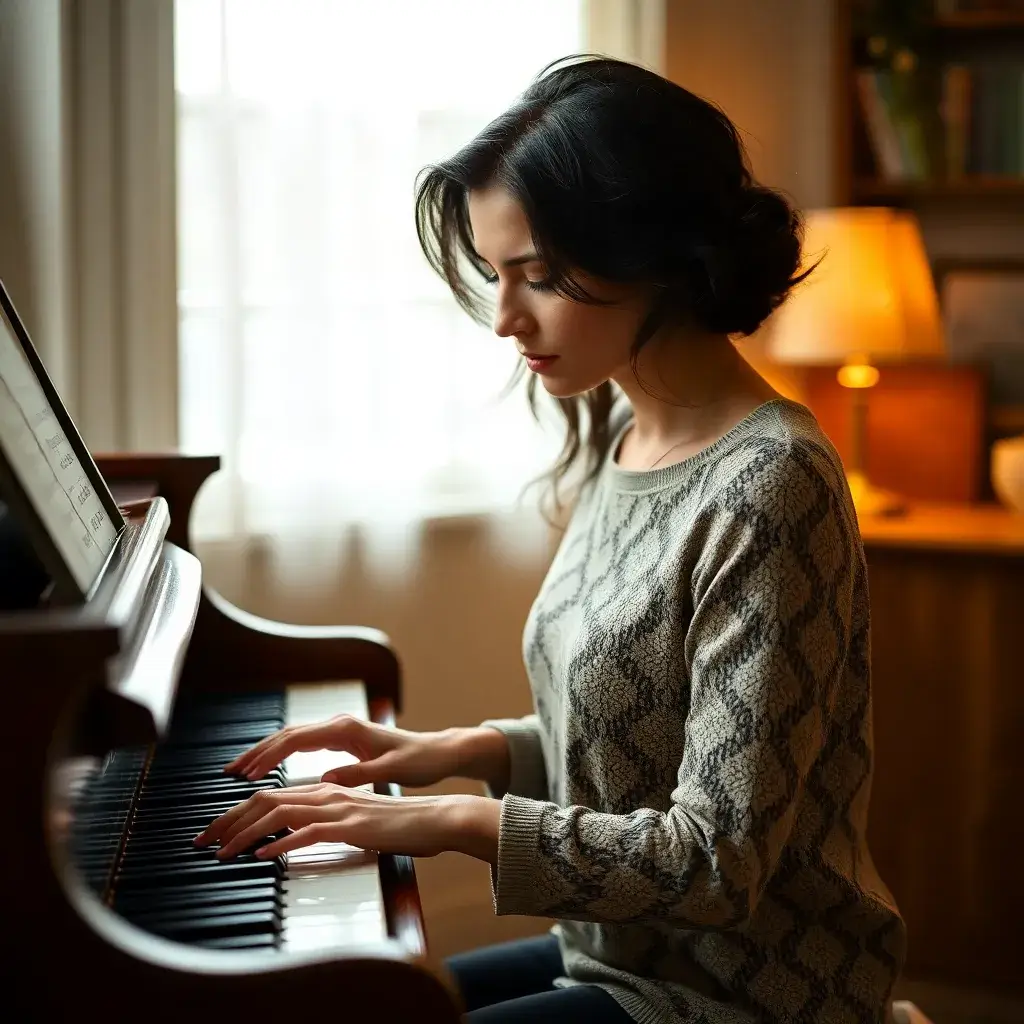
The image captures a lively scene in a wooden hall or gazebo, warmly lit by string lights. A woman is at the center, joyfully playing the accordion and smiling
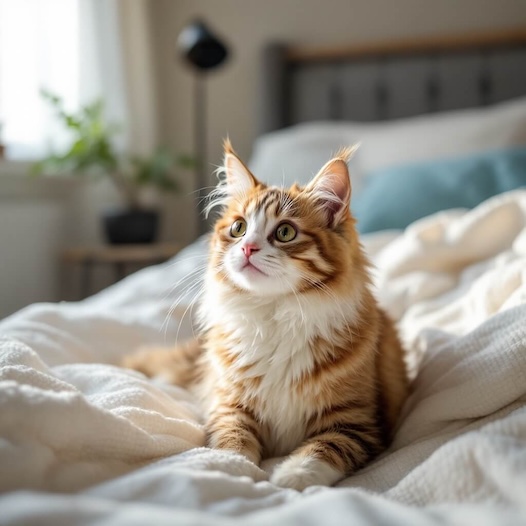
The image showcases a fluffy orange and white cat resting on a bed with soft, crumpled blankets. The cat has large, expressive eyes and a curious expression, gazing upward, suggesting it might be captivated by something above.
What Does an Image-to-Prompt Generator Extract?
An AI image-to-prompt tool reverse-engineers any reference picture into natural-language instructions you can reuse for alt text, creative briefs, or fresh generations. Breaking the output into five building blocks makes it easy to swap just the subject or lighting without losing the visual look:
Subject & Pose
Identifies primary people, objects, expressions, attire, and physical arrangement in the frame.
Framing & Camera
Captures shot distance (close-up, wide, top-down), camera angle, and lens depth of field.
Lighting & Palette
Transcribes directional lighting (golden hour, studio rim, overcast) and dominant color tones.
Material & Texture
Preserves tactile cues such as matte ceramic, rain-wet asphalt, fabric weave, or 35mm film grain.
Style & Medium
Distinguishes candid photography, vector illustration, screen-print poster, or 3D render cues.
How to Adapt an Extracted Prompt for Each AI Model
Modern diffusion and multimodal models interpret extracted descriptions differently—tune a single sentence after copying to match the model you run next:
| Target Model | Cost on Flux1 AI | How to Adapt Your Extracted Prompt |
|---|---|---|
| FLUX.2 Pro | 6 credits (1K) | Convert vague adjectives into concrete lighting and lens notes, and place exact hex color codes (#RRGGBB) or quoted display text where needed. |
| FLUX.1 Kontext Pro | 6 credits | Extract the baseline prompt first, then edit only the delta against your uploaded photo (e.g., "Keep composition and face; change coat to wool olive"). |
| GPT Image 2.6 | 12 credits (1K) | Add explicit layout hierarchy ("top headline", "two columns", "no other text") when turning reference posters or UI screenshots into fresh layouts. |
| Nano Banana Pro | 14 / 28 credits (2K / 4K) | Trim redundant buzzwords and state subject attire, expression, and aspect-appropriate framing directly for sharp 2K–4K portraits. |
Recommended Next Steps
Generate & Remix Directly from Your Prompt
Paste the extracted prompt into our flagship image generators or edit the original photo directly.
FLUX.2 Pro
Best for photorealism, typography, and faithful adherence to long extracted prompts.
Flux Kontext
Upload your source image and modify objects, backgrounds, or styles in seconds.
Nano Banana Pro
Google's 2K–4K photorealistic image generator with strong scene and portrait detail.
Flux 1.1 Pro
Fast, everyday FLUX generation ideal for iterating on prompt variations.
Häufige Fragen zu Flux KI
- Was ist die Flux1 AI Bild zu Prompt Funktion?
Flux1 AI Bild zu Prompt ist ein kostenloses Tool, das Bilder in Textbeschreibungen umwandelt. Diese KI-gestützte Funktion analysiert den Inhalt eines Bildes und erstellt eine genaue Beschreibung.
- Ist Flux1 AI Bild zu Prompt kostenlos?
Ja, Flux1 AI Bild zu Prompt ist völlig kostenlos. Wir möchten KI-Technologie für jeden zugänglich machen, sodass Sie dieses Tool ohne Kosten nutzen können.
- Wie funktioniert Flux1 AI Bild zu Prompt?
Laden Sie einfach ein Bild auf unserer Plattform hoch. Unsere KI analysiert das Bild und generiert eine Textbeschreibung. Der Prozess ist schnell und erfordert keine weitere Eingabe.
- Welche Bildtypen kann ich verwenden?
Flux1 AI Bild zu Prompt unterstützt gängige Formate wie JPEG, PNG, GIF. Laden Sie Fotos, digitale Kunst, Screenshots usw. hoch, unsere KI generiert eine Beschreibung.
- Kann ich mehrere Bilder gleichzeitig verwenden?
Derzeit unterstützt Flux1 AI Bild zu Prompt nur das Hochladen und Verarbeiten eines Bildes gleichzeitig. Sie müssen Bilder einzeln hochladen.
- Kann ich die generierten Beschreibungen anpassen?
Flux1 AI Bild zu Prompt generiert Beschreibungen automatisch. Derzeit gibt es keine Anpassungsoptionen. Die KI liefert eine Standardbeschreibung für jedes Bild.
- Wie genau sind die Beschreibungen?
Flux1 AI Bild zu Prompt verwendet fortschrittliche KI für genaue Beschreibungen. Es erkennt Objekte gut, erfasst aber möglicherweise nicht jede Nuance. Es liefert eine allgemeine Beschreibung.
- Wofür kann man Flux1 AI Bild zu Prompt nutzen?
Nützlich für Alt-Text (Barrierefreiheit), Social-Media-Inhalte, Unterstützung für Sehbehinderte oder um zu sehen, wie KI Bilder interpretiert.